How GPS Tracking for Elderly Relatives Offers Peace of Mind
Watching a parent or older relative grow less steady on their feet is one of the harder parts of getting older ourselves. You start noticing small things: a hesitation before crossing the street, a forgotten route home, a longer pause before answering the phone. The impulse to help is strong, but so is the desire not to take away their independence. That is where the idea of gps tracking for elderly family members starts to make real sense, not as surveillance but as a quiet safety net.
Many of us have tried the usual solutions. A daily phone call to check in. A neighbour who keeps an eye out. A handwritten list of emergency numbers stuck to the fridge. These work up to a point, but they rely on someone remembering to call, someone being home, someone not wandering off in the five minutes between checks. A GPS tracker fills that gap without hovering.
What GPS Tracking Really Means for an Older Person
The technology behind a GPS tracker is simple enough. A small device uses satellite signals to figure out where it is, and that location gets sent to a phone or a monitoring service. For an older person, the device might be a pendant worn around the neck, a clip-on gadget, or something sewn into a coat lining. They do not need to press buttons or remember to charge it every night, though some models do need a weekly charge.
The real value is not in knowing their location down to the metre. It is in the context. If your mother usually leaves the house at 10 a.m. for her walk to the shops and the tracker shows she has not moved past the front gate by 10:30, you have a reason to check in gently. If your father with early-stage dementia wanders off during a family barbecue and the tracker shows him heading toward the main road, you can act fast.
This is not about control. It is about having a tool that reduces the number of unknowns. When you know where someone is, you can let them have more freedom, not less.

When a Simple Phone Call Is Not Enough
A phone call works when the person can answer and tell you where they are. But what if they have fallen and cannot reach the phone? What if they are confused and do not recognise the street names around them? What if they left the house without their mobile? These are the scenarios where gps tracking for elderly relatives becomes a practical backup, not a luxury.
I have a friend whose father lives alone in a small town. He is sharp most days but has moments of confusion. They tried a basic personal alarm that he wears on his wrist. It works fine if he is in the house and can press the button. But last winter he went for a walk on an unseasonably warm day, got turned around, and ended up two suburbs away. The alarm did not help because he did not realise he was lost. A GPS tracker would have shown his daughter exactly where he was within minutes.
That story stuck with me because it is not rare. It is the kind of thing that happens slowly, and by the time you realise something is wrong, the person has already covered a lot of ground.
Practical Considerations Before You Buy
Not all GPS trackers are the same, and picking the right one matters. Here are a few things to think through before you decide.
- Battery life: Some devices last days, others need charging every evening. For someone who is forgetful, a longer battery life reduces the risk of the tracker being dead when you need it.
- Size and comfort: A tracker that is bulky or awkward to wear will get left in a drawer. Look for something that fits their lifestyle, a slim pendant, a watch-style band, or a clip for a belt loop.
- Coverage area: If your relative lives in a rural area or travels, check that the device uses a network with good coverage there. Some cheap trackers rely on mobile networks that have gaps in the countryside.
- Ease of use: The person wearing it should not need to do much. Ideally they put it on in the morning and forget about it. Complicated setup or frequent alerts will frustrate them.
There is also the question of cost. Some devices have a monthly subscription for the SIM card or monitoring service. Others are one-off purchases with no ongoing fees. Over a year, the difference can add up, so it is worth doing the maths for your own situation.
Balancing Safety with Dignity
The hardest part of introducing any monitoring technology is the conversation. No older person wants to feel like they are being watched. The trick is to frame it as something that helps them stay independent, not something that takes freedom away.
Start by talking about your own worries, not their failings. You can say something like, "I get anxious when I cannot reach you on the phone, and this tracker would let me know you are okay without me calling all the time." That shifts the focus from their limitations to your peace of mind. Most people are willing to accept a small inconvenience if it means their family stops worrying so much.
It also helps to let them choose the device. If you bring two or three options and ask which one they would be comfortable wearing, they have a sense of control. Some prefer a pendant that looks like a piece of jewellery. Others would rather have something discreet that fits under a shirt.
What Happens When the Tracker Is Not Enough
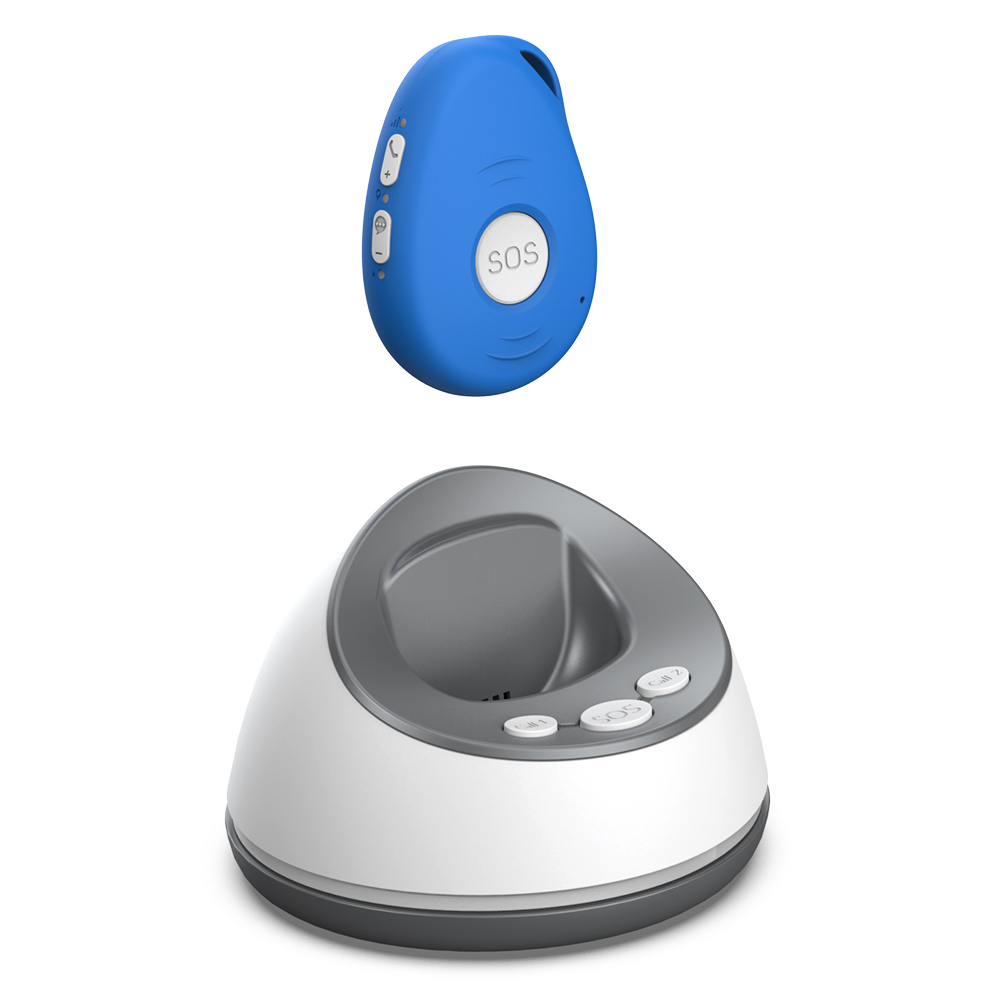
GPS tracking gives you location data, but it does not let you talk to the person or hear what is happening around them. That is where a two-way voice system adds real value. A device that lets you speak to your relative through a speaker, or that connects you to a monitoring centre, can turn a location alert into a proper response.
For example, if the tracker shows your father has left the house at 2 a.m., you can call him through the device and ask where he is going. Sometimes he is just restless and will turn back. Other times he is confused and needs guidance. Knowing his location is the first step, but being able to talk to him can prevent a situation from escalating.
Fall detection is another layer worth considering. A tracker with an accelerometer can tell when someone has fallen and send an alert automatically, even if the person cannot press a button. That matters because falls are one of the biggest risks for older adults, and the faster someone responds, the better the outcome.
Making the Decision for Your Family
There is no single right answer for every family. Some older adults are happy to wear a tracker and never take it off. Others resist at first but come around once they see how it works. A few will never accept it, and in those cases you have to respect their choice and find other ways to stay connected.

What I have learned from talking to families who have been through this is that the technology itself is just one piece. The real work is in the conversations, the planning, and the willingness to adapt as needs change. A GPS tracker bought today might be the right tool for now, but next year you might need something with fall detection or two-way calling. That is okay. The goal is not to get the perfect device on the first try. It is to keep your relative safe and independent for as long as possible.
If you are in New Zealand and looking into this, Familyr provides personal medical alarms for seniors with SOS, GPS, fall detection, and family-monitored two-way calling. They are based at 14 Grand View Road, Remuera, Auckland 1050, New Zealand, and can be reached at +64 9 872 0345. It is worth a call to talk through what might suit your situation.
Connect with us on YouTube.